Ysabeau
Indigenous knowledge in pedagogy
Humanist proportions, confident at large sizes and legible at small. Carries the weight of an editorial title without inheriting the formality of a traditional academic serif.
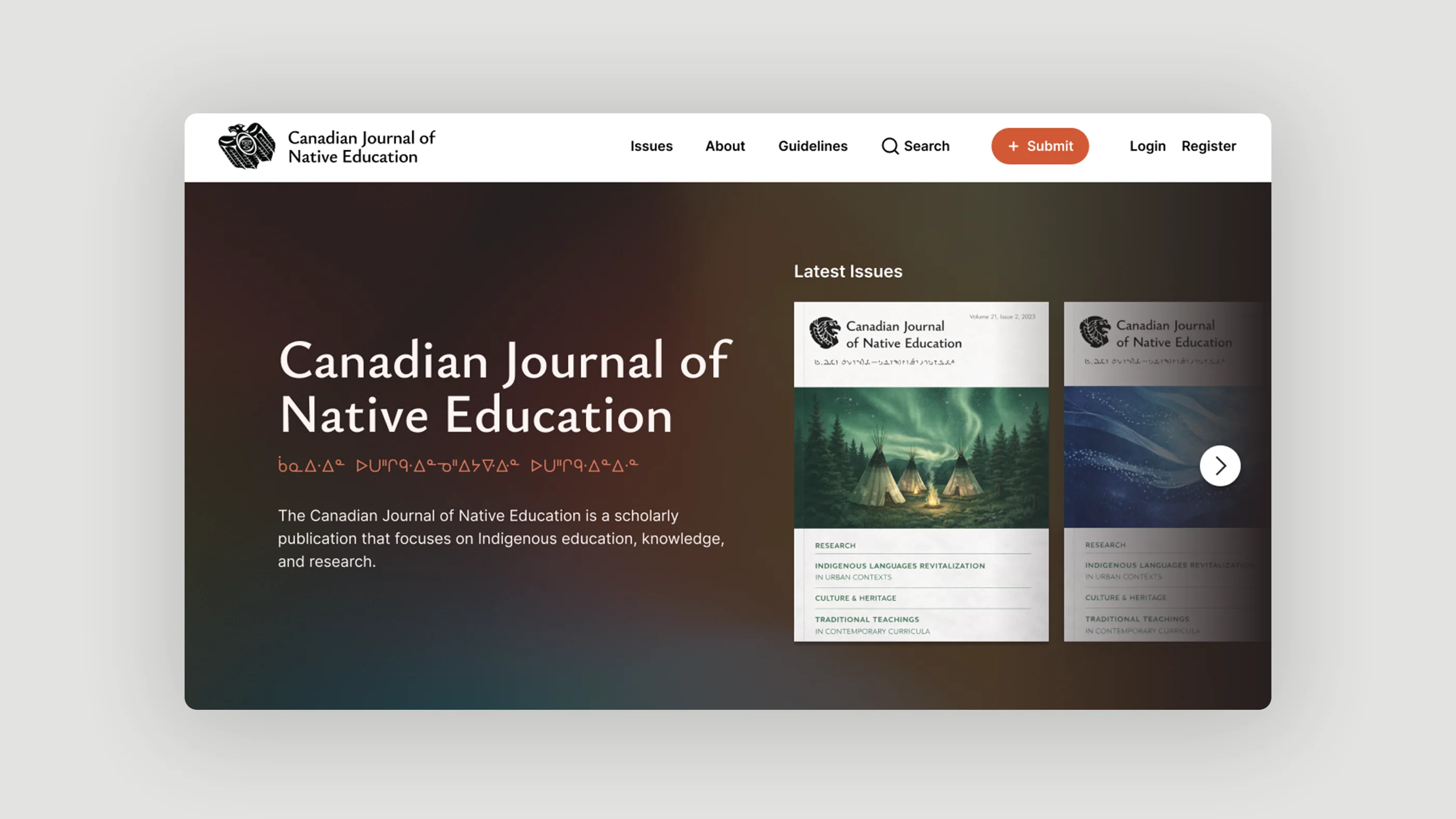
THE BRIEF
Three audiences land on the same site every week: a reader looking for a paper, a reviewer with a deadline, an author submitting work. The old CJNE — built on a battle-worn OJS — buried each of them under the same flat hierarchy. Submission was ambiguous. The archive of four decades of Indigenous scholarship had no pathway. The article itself was hard to read.
We designed a system around role, not around the homepage — a scaffolding within OJS that carries the journal forward, clarity first, everything else in service of it. The principle applies wherever readers have to find the right thing first: any platform with editorial weight and a complex audience.
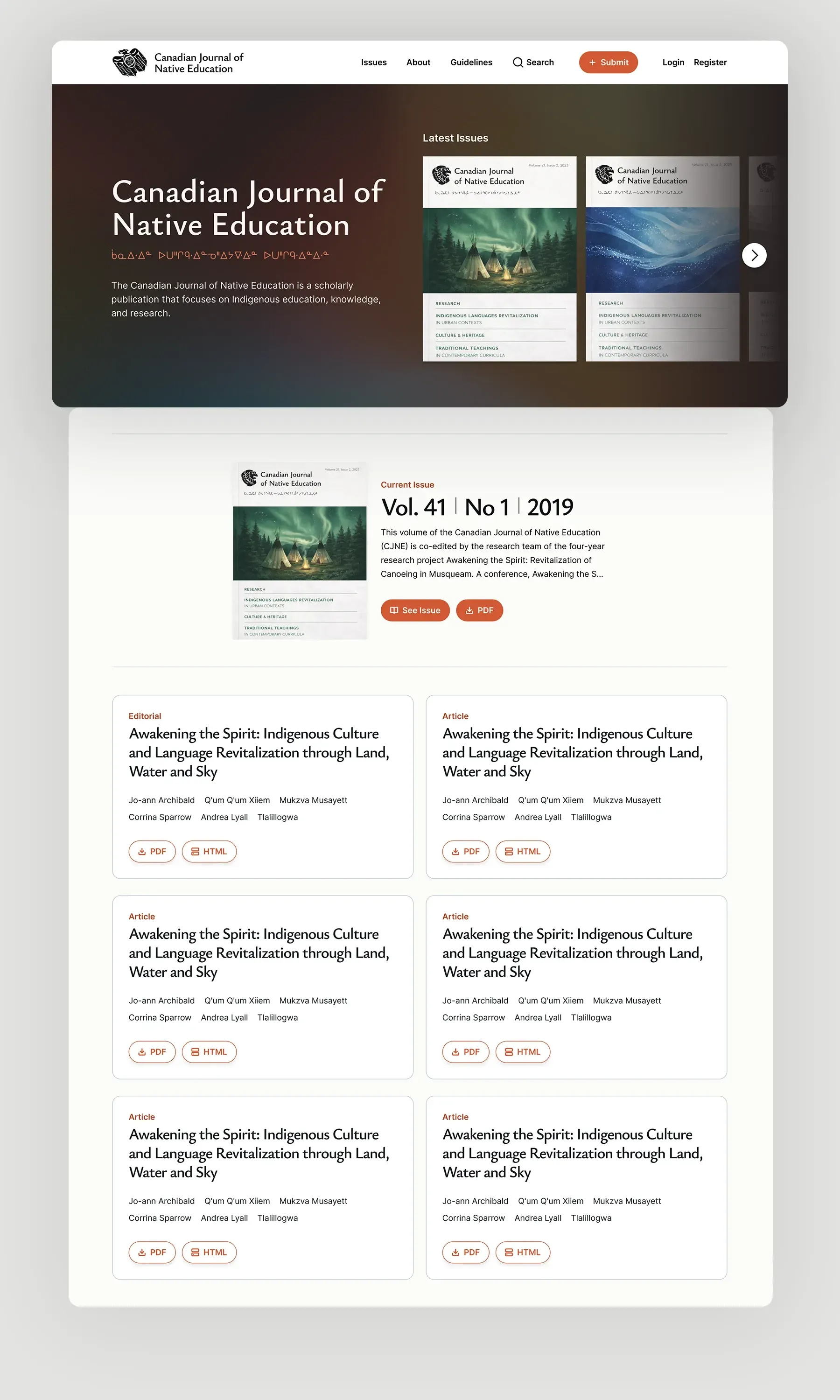
FIG. 01 · HOMEPAGE
A homepage built around the article — featuring current research first, with archives and editorial pathways quietly accessible beneath.
THE ARTICLE
Academic articles are dense by nature — citations, methodology, footnotes, structured argumentation. The redesigned article page introduces clear typographic hierarchy, generous line-length, and a sticky reading scaffold so readers never lose their place in long-form material.
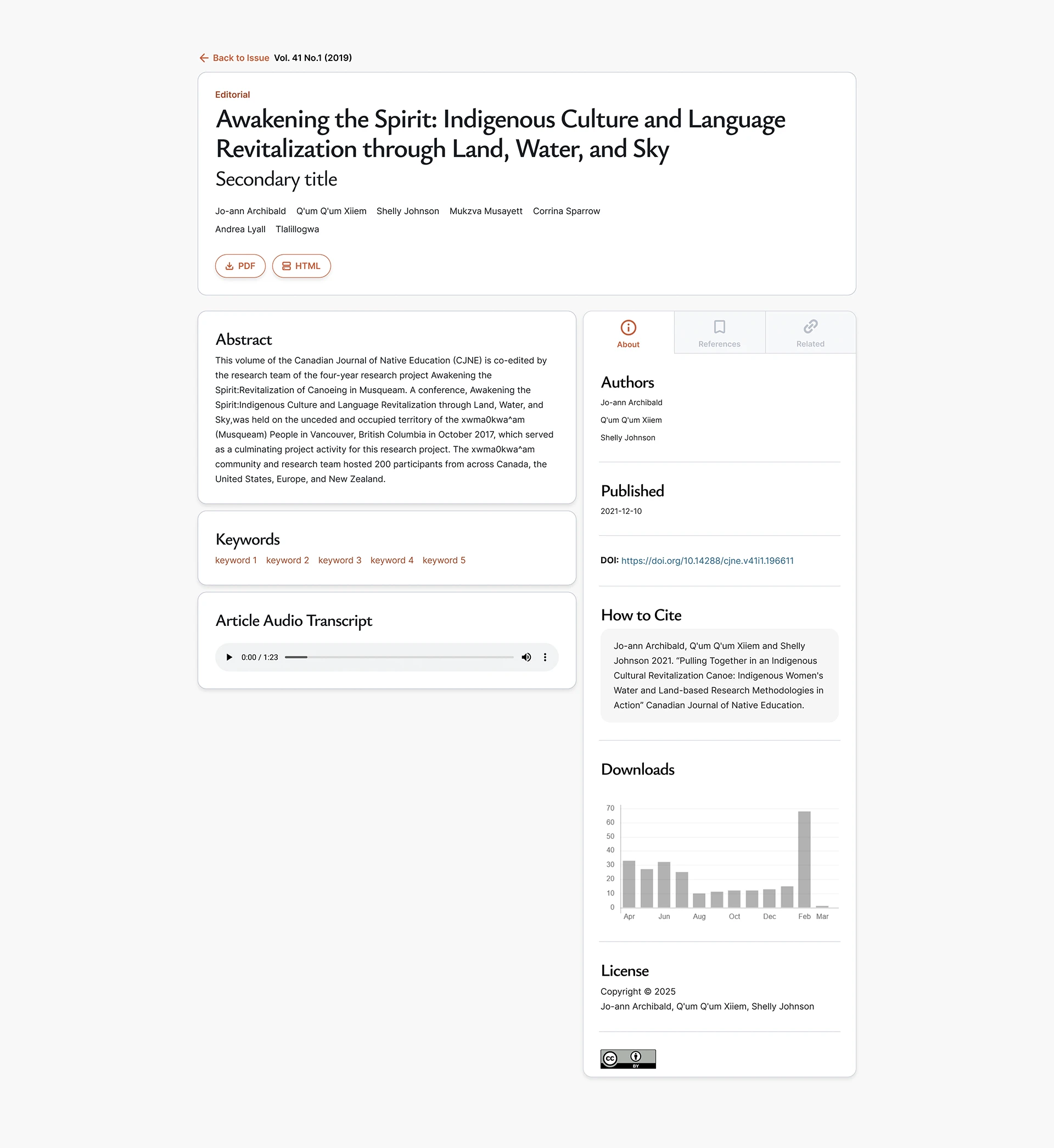
FIG. 02 · ARTICLE PAGE
Given the density of academic articles, tabs were used to hierarchise content — improving readability and accessibility without disrupting long-form reading.
EDITORIAL INFRASTRUCTURE
Editorial guidelines are dense and role-specific, and historically lived in long, unbroken pages. Tabs separate the experience by audience — submitting authors, peer reviewers — so each role enters at the right depth and the right context, without sifting through content meant for someone else.
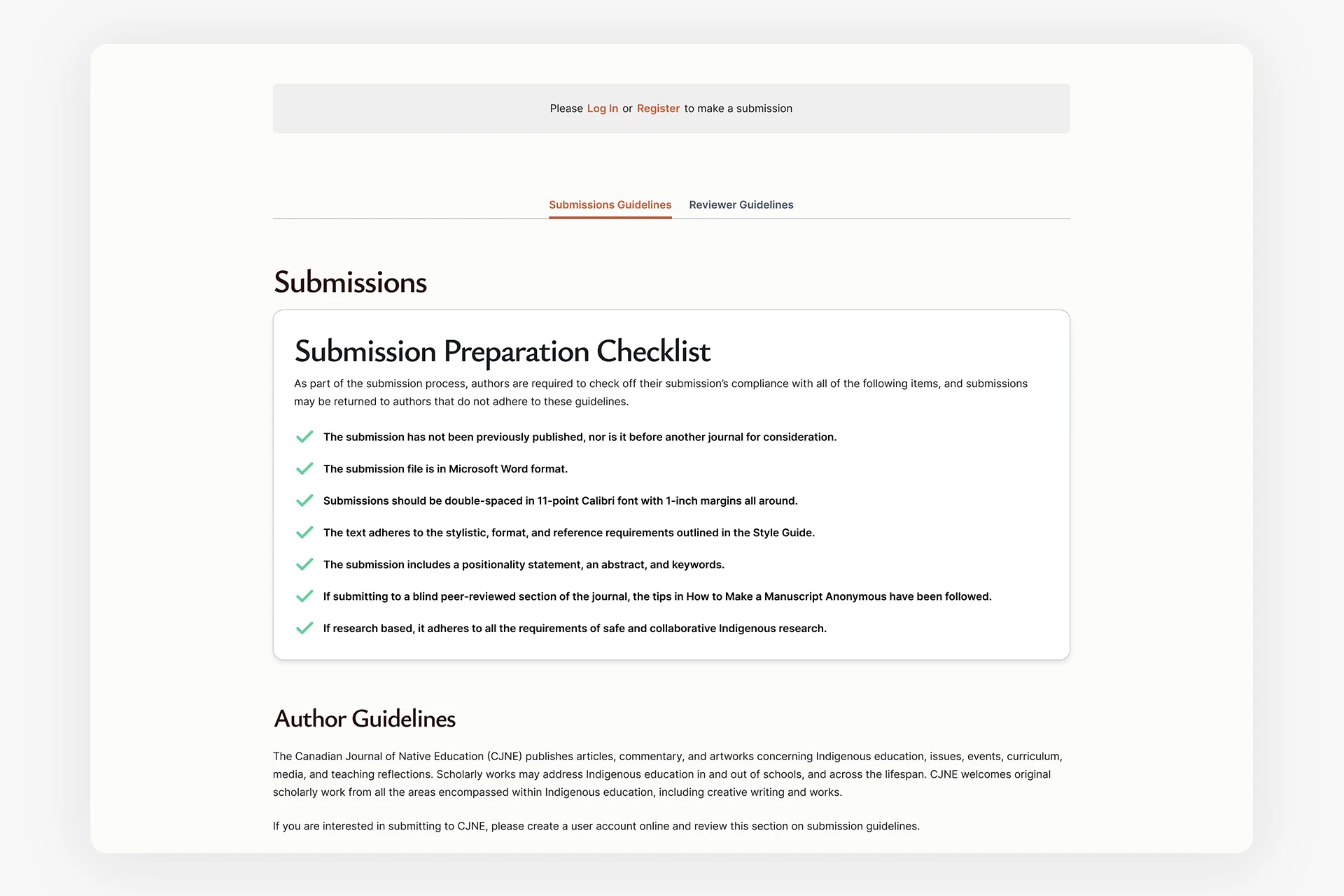
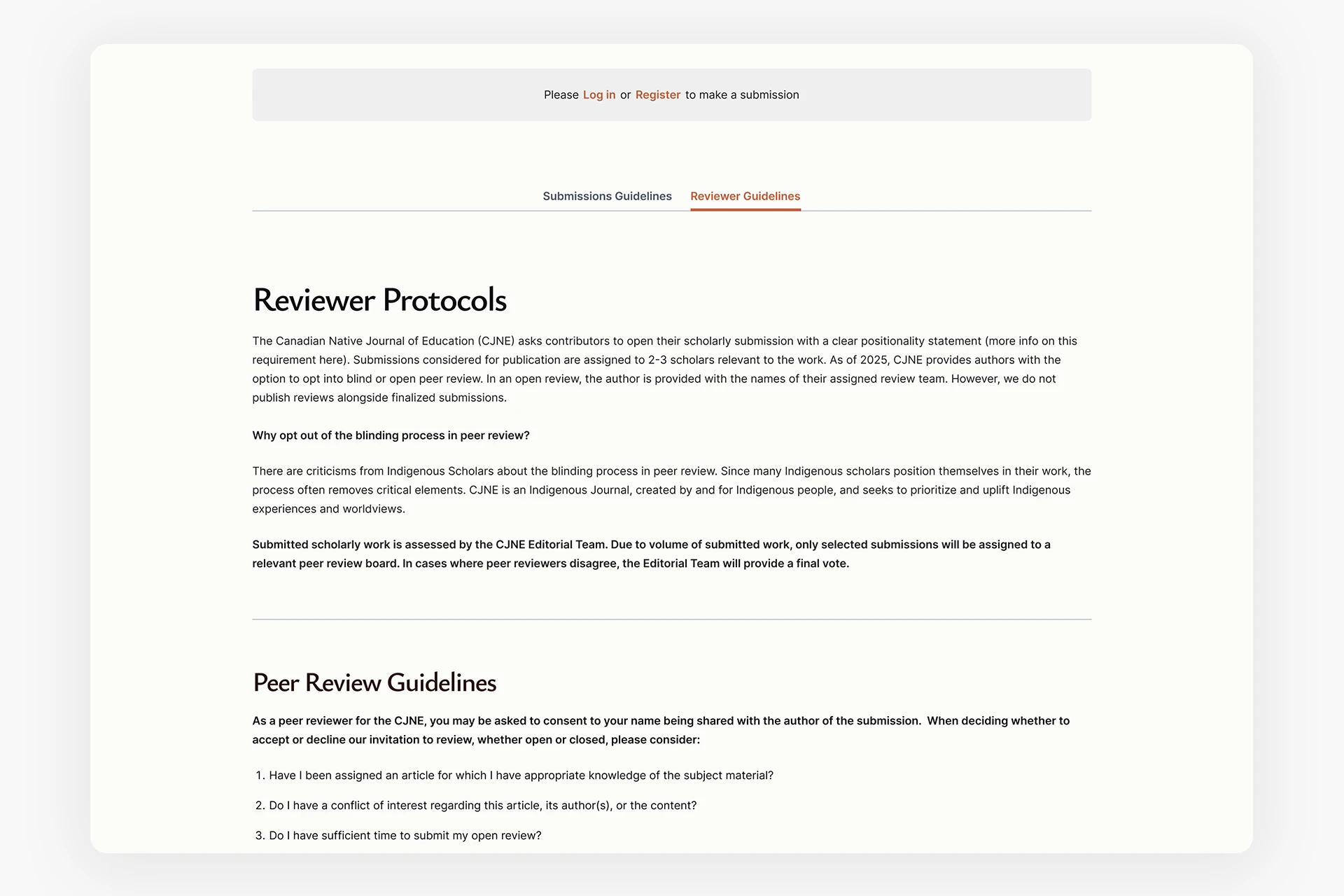
FIG. 03 · GUIDELINES
Role-based tabs separate submission and review guidelines, improving clarity and accessibility across dense editorial content.
"An academic journal is not a website. It's an archive — and it should be designed like one."
DESIGN PRINCIPLE — EDITORIAL OVER ENGAGEMENT
THE ARCHIVE
The volume archive collapses four decades of issues into a single editorial index — chronological, searchable, and built so a researcher arriving for the first time can find a 1992 paper as easily as a current one.
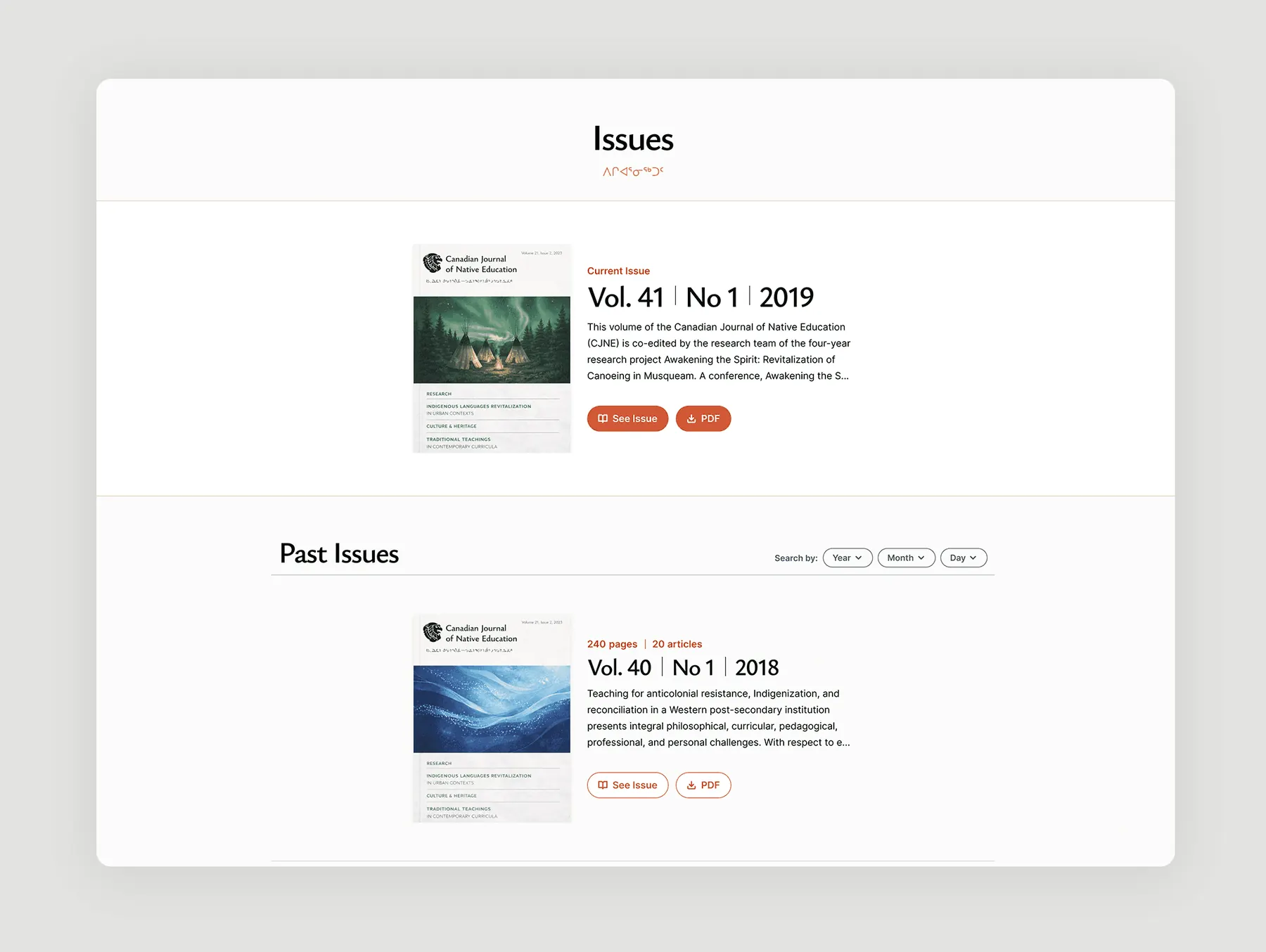
FIG. 04 · VOLUMES & ARCHIVES
A unified index that presents the journal's full publishing history without overwhelming new arrivals.
THE ISSUE
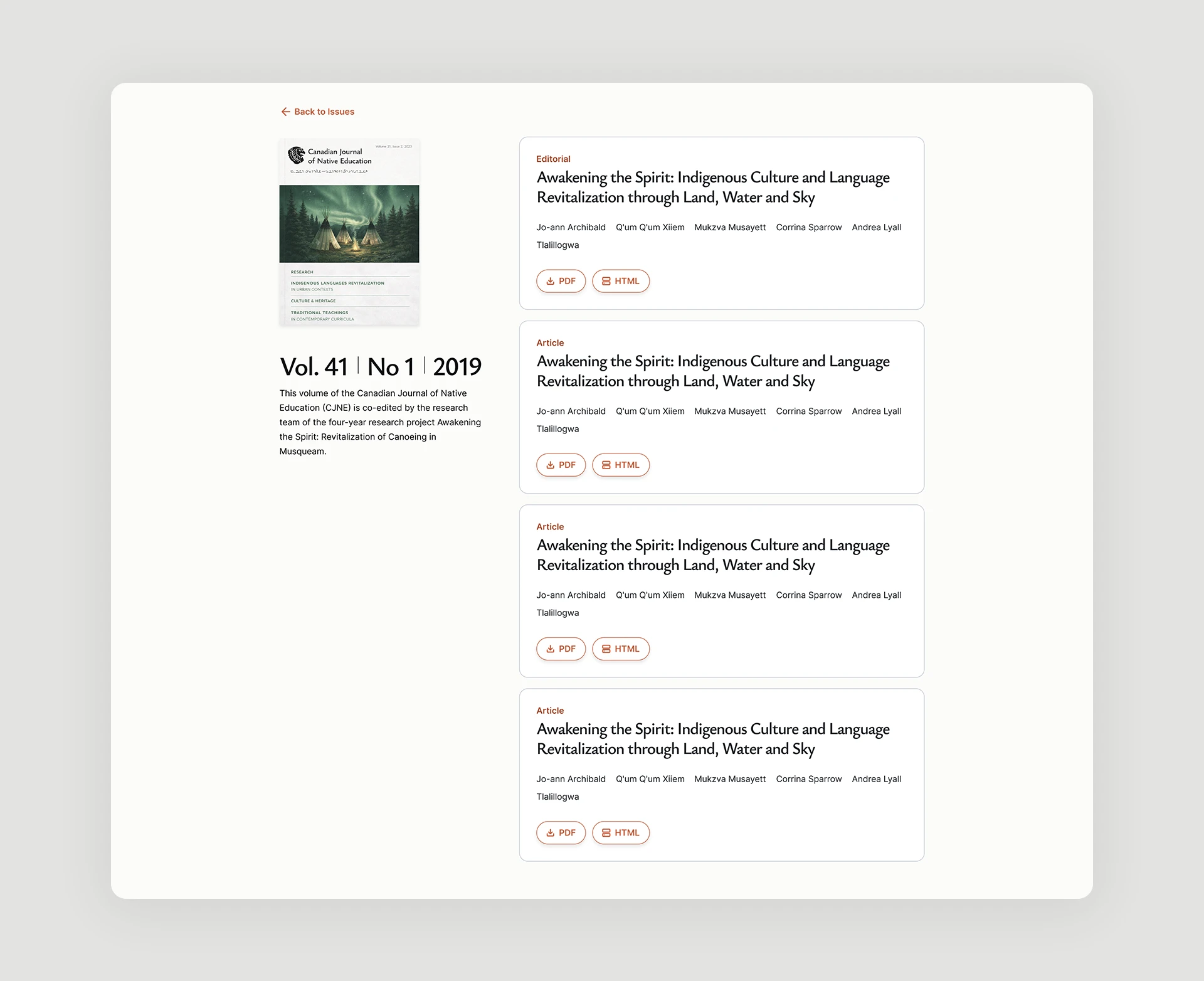
Each issue presents itself with the same typographic care as a printed journal: editor's note, articles in order, contributor index. Quiet, structured, patient — built for the way scholarship is actually read.
THE TYPOGRAPHY
Three families chosen so an article in Cree renders with the same care as one in English. Editorial range first — Latin display, Indigenous syllabics, screen-first body — picked for coverage, parity and longevity.
Ysabeau
Indigenous knowledge in pedagogy
Humanist proportions, confident at large sizes and legible at small. Carries the weight of an editorial title without inheriting the formality of a traditional academic serif.
ᓀᐦᐃᔭᐍᐏᐣ
ᐁ ᐃ ᐅ ᐊ ᐯ ᐱ ᐳ ᐸ ᑌ ᑎ ᑐ ᑕ
Full coverage for Cree, Inuktitut and Anishinaabe syllabic scripts, with rendering parity to the Latin body. Set in the journal's orange — the only place colour appears in the system, reserved for the script that carries the journal's reason for being.
Inter
Abstract
Used for body copy, abstracts, footnotes, navigation and metadata. Neutral, screen-optimised, gets out of the way so the writing leads.
FIG. 05 · TYPOGRAPHY SYSTEM
Three families covering display, Indigenous syllabics and body. Chosen so a Cree-language paper opens with the same typographic confidence as an English one — and so the system holds up four decades from now.
THE OUTCOME
What was delivered is a UI system, not a single redesign — a kit of editorial components, tabs, archives, article scaffolds and submission flows that the journal can extend issue by issue without redesigning each time.
Built within the constraints of OJS, accessible by default, and shaped around the rhythms of how readers, reviewers, and editors actually use a scholarly journal. Built to last as long as the scholarship it carries.
NEXT PROJECT